You’re planning a sales kickoff, leadership summit, or annual meeting, and the pressure usually lands in one question: who should open the room? You want someone who can shift the energy in the room and hand people a story they’ll still reference months later. That’s the difference between filling a keynote slot and creating a turning point in the event.
That distinction matters even more if you’re actively looking at women keynote speakers. Representation is still uneven across conference stages. In a study of 162 academic conferences from 2019 to mid-2022, women accounted for 37.4% of keynote speakers, with clear variation by region and conference structure, according to this conference keynote analysis. In Bay Area tech events, the imbalance has been even sharper, with women making up 25.0% of speakers overall across 25 analyzed events, based on this Bay Area tech event review.
The better approach is story first. Job titles don’t move audiences. Lived experience does. These seven women keynote speakers stand out because what they’ve built, endured, or led gives their message weight in the room.
1. Shannon Rowbury
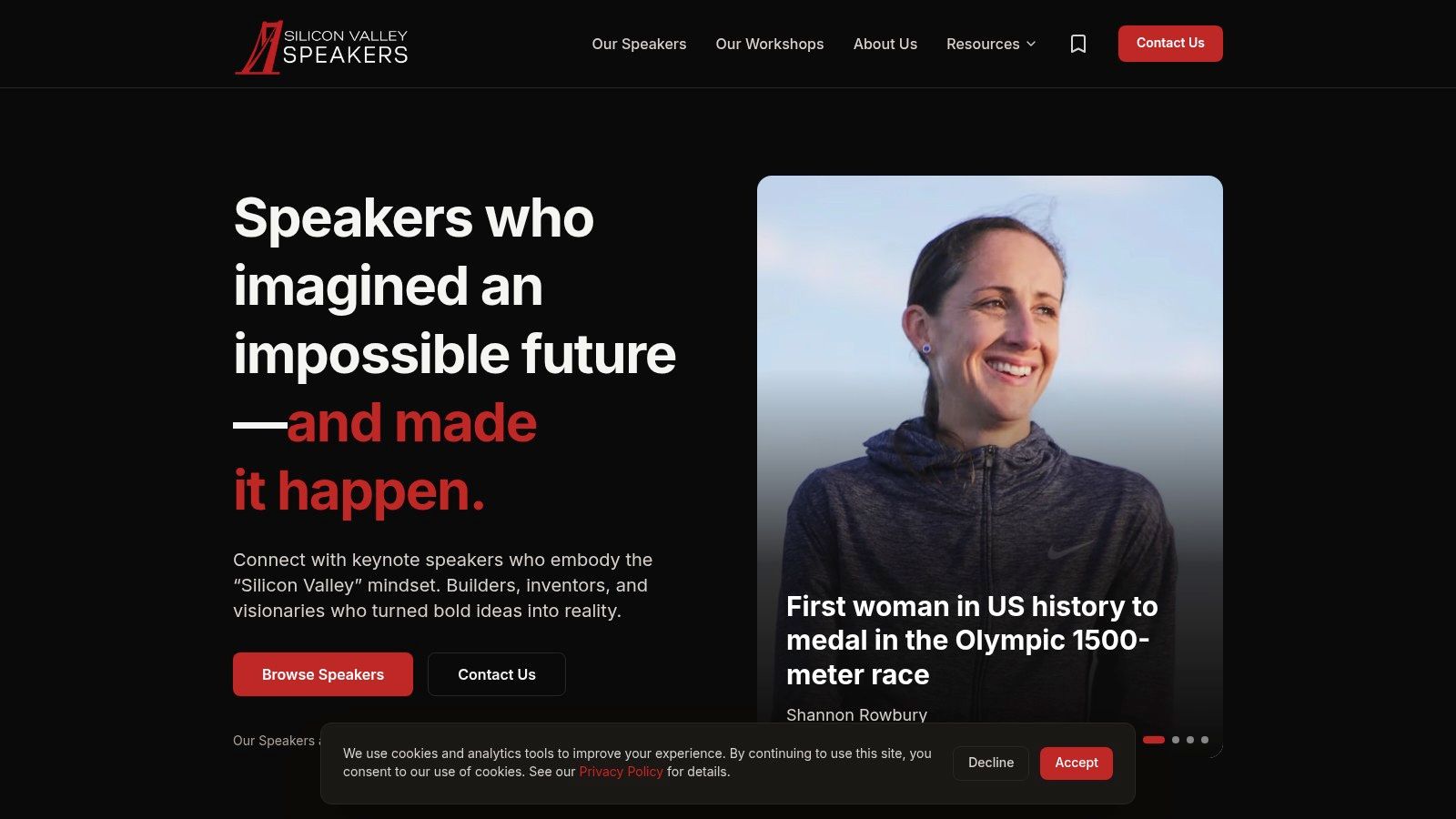
Some speakers motivate for an hour. Shannon Rowbury gives teams a language for pressure, preparation, and recovery that leaders can use long after the event. As a three-time Olympian and American record holder, she speaks from a world where tiny margins, disciplined training, and emotional control decide outcomes.
That lands especially well with revenue teams and executive groups. A sales kickoff, for example, already has built-in tension. Targets are high, attention is fragmented, and leadership needs more than generic inspiration. Rowbury’s edge is that she understands performance cycles. She can connect elite competition to business rhythms without sounding forced.
Where her story works best
Her strongest fit is with audiences that need to perform under scrutiny. Think annual kickoffs, leadership offsites, and company-wide meetings after a demanding quarter. She doesn’t treat resilience like a slogan. She treats it like a trainable operating system.
The same principles that break records on the track, goal setting, relentless iteration, and belief in the team, also shape high-performance organizations.
If you're evaluating peak performance keynote speakers, Rowbury is a strong choice when you want energy with substance. The practical trade-off is simple. If your audience wants a dense technical framework, she’s not that speaker. If they need a memorable way to rally around discipline, trust, and competitive focus, she’s excellent.
A common booking mistake is putting an athlete onstage just for inspiration. The better move is to brief her around a specific team challenge. New manager readiness. Sustaining performance during a long sales cycle. Rebuilding confidence after a hard year. That’s when the story becomes useful, not just moving.
2. Milly Tamati

Not every keynote has to be about the technology itself. Milly Tamati speaks to the people who have to thrive alongside it. She is the founder of Generalist World, a 150,000-person global community built around non-linear careers and the value of people who do not fit in a single box, and she built it from a Scottish island of 191 residents with no funding and no traditional playbook.
For corporate audiences, her message is timely: in the age of AI, adaptable generalists are becoming a company's competitive advantage, and most organizations are structured to overlook them. She is also a seasoned MC, having hosted stages at Web Summit, SXSW London, and Turing Fest, so she is as comfortable running a room as headlining it.
Where her talk fits
Milly is a strong choice for all-hands meetings, culture events, and future-of-work summits, and she doubles as an event host when you need someone to carry a full day. She helps teams see the hidden value in their multi-skilled people and gives managers a way to talk about careers that do not run in a straight line.
The people who do not fit neatly into one box are often the ones who hold a company together. In the age of AI, that is a superpower, not a problem.
She fits companies rethinking how they hire and retain talent, and events that want an energizing host with a real builder's story behind the message.
3. Sol Rashidi
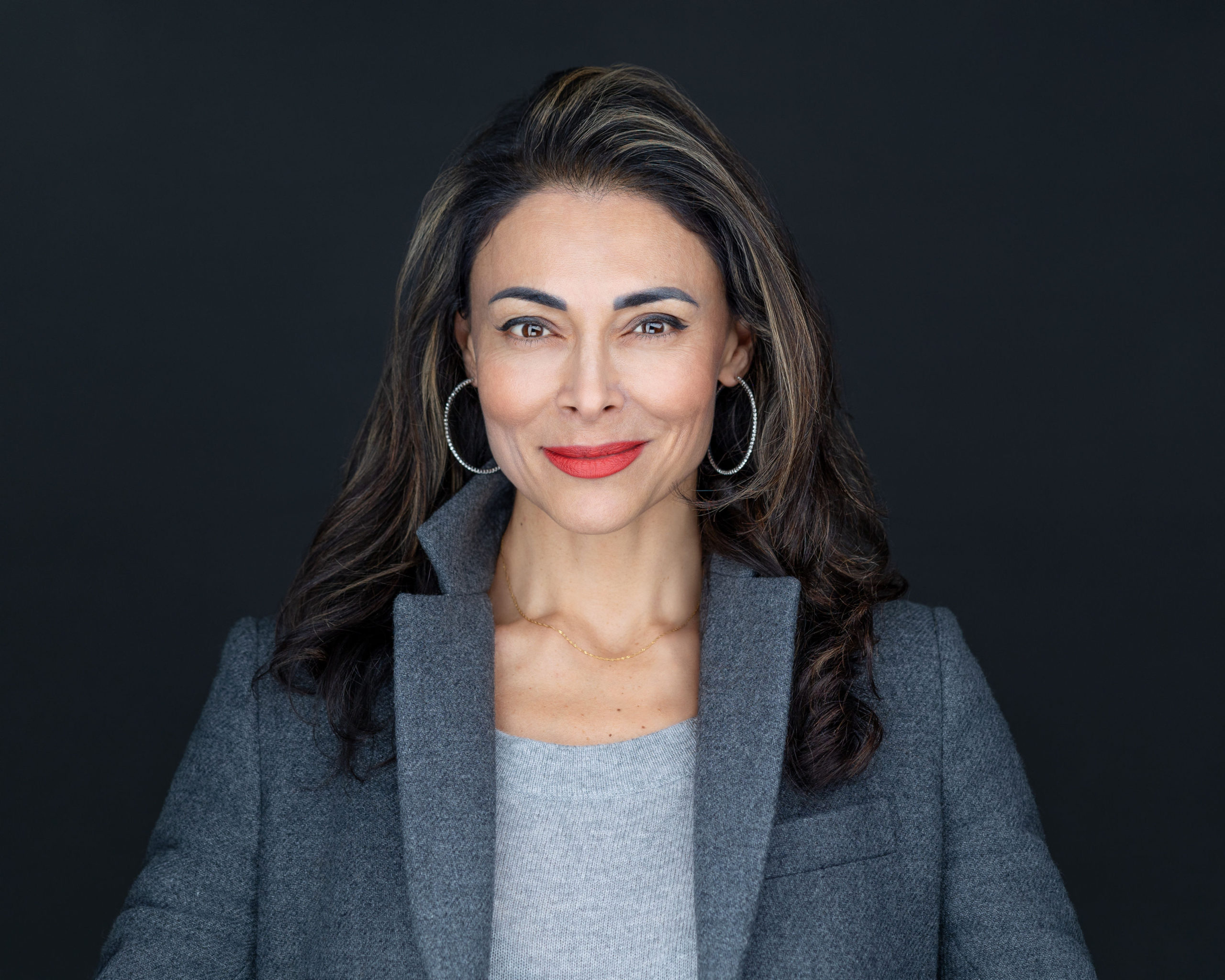
Plenty of people talk about AI strategy. Sol Rashidi has actually run it at Fortune 100 scale. She was one of the first Chief Data and Analytics Officers in corporate America, holding the role at Estee Lauder, Merck, Sony Music, and Royal Caribbean, and she was an early leader on the team that took IBM's Watson to market.
That track record is why she connects with executive audiences. She is not describing AI from the outside. She has stood up data and AI functions inside large, complicated companies, absorbed the failures, and shipped the wins. Her book, Your AI Survival Guide, turns that experience into a playbook leaders can actually use.
Why executives book her
Sol is the right choice when leaders are tired of AI theory and want to know what actually works and where the money gets wasted. She is direct about the parts vendors gloss over, which builds trust fast with a skeptical C-suite.
Most AI projects do not fail on the technology. They fail on the messy human work of getting people to change how they operate.
She fits leadership summits, board sessions, and industry conferences where the audience owns real budgets and real risk. Brief her on the initiatives your teams are attempting, and she will pressure-test them on stage.
4. Drue Kataoka

Most AI keynotes stay in the abstract. Drue Kataoka makes the shift visual. She is an authority on visual generative AI and how it is changing the way leaders communicate and decide. She built a global technology art studio from scratch, with collectors in more than 30 countries, so she speaks about reinvention and scaling from firsthand experience rather than theory.
That combination plays well with executive audiences who are past the hype and want to know what visual AI actually changes in their work. She has delivered keynotes at the World Economic Forum in Davos, the Milken Institute Global Conference, the Vatican's Pontifical Academy of Sciences, and a private summit on Necker Island, and her work has been exhibited at the International Space Station and auctioned by Phillips.
Where her keynote lands
Drue is strongest with leadership teams and innovation forums that want a keynote which is intellectually rigorous and visually stunning at the same time. Her signature talk, The Vision Muscle, treats vision as a skill leaders can train rather than a trait they are born with.
Vision is a muscle. In the AI era, the leaders who train it will see around corners the rest of the market misses.
A practical note for planners: her sessions are as much a visual experience as a talk, so they shine on a big stage with strong production. If your event theme is innovation or the future of leadership, she raises the ceiling on what a keynote can be.
5. Dr. Maya Ackerman
AI keynotes often break in two unhelpful directions. They’re either too abstract for business audiences or too technical for everyone else. Dr. Maya Ackerman sits in the middle in the best way. As an AI researcher, professor, and founder of a generative AI music company, she can explain what’s changing without losing the room.
That makes her a strong option for mixed audiences where product leaders, executives, marketers, and engineers are all in the same seats. She can talk about invention, not just adoption. That matters because audiences can tell when a speaker has only commented on a trend versus built within it.
Why event planners book her
Her talks work well when the event theme is innovation but the audience still needs clarity. Internal AI education sessions are a good example. So are customer conferences where the company wants to sound credible, current, and practical.
Generative AI isn't just a tool. It's a creative partner. The leaders who learn how to work with these systems will shape what comes next.
For organizations searching for artificial intelligence keynote speakers, Ackerman brings something especially useful. She can make non-technical attendees feel smarter, while still giving technical teams enough depth to stay engaged.
There’s a larger reason this matters. The pipeline of women keynote speakers in technical categories is still thin. One recent summary noted that women are often featured in leadership and topics of personal development and influence, while women with visible profiles in AI and innovation remain much harder to find on curated speaking rosters, as discussed in this overview of women speakers and topic gaps. If your event is about the future of technology, a speaker like Ackerman helps correct that imbalance with real subject-matter authority.
6. Rana el Kaliouby
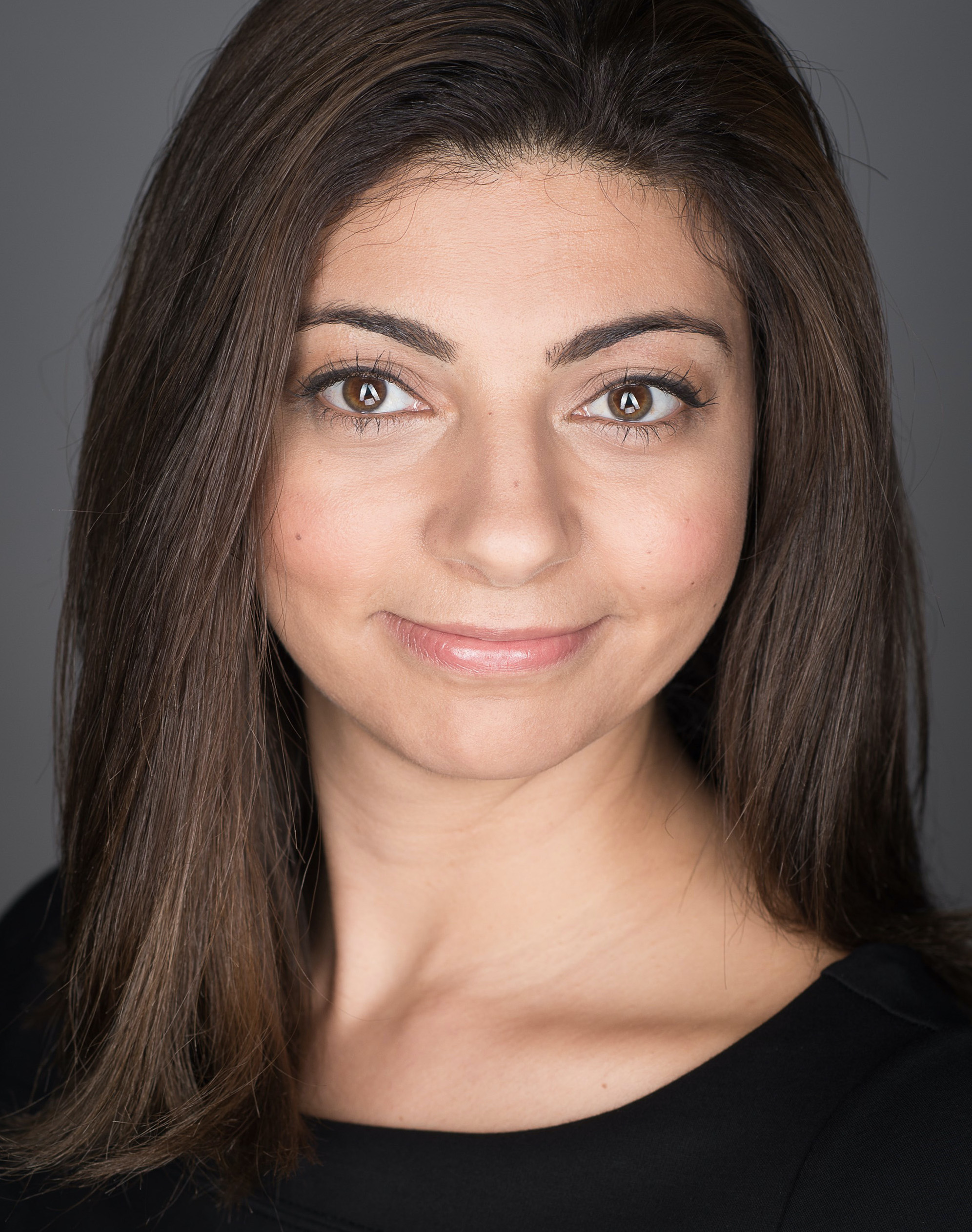
Rana el Kaliouby works at the line where artificial intelligence meets human emotion. She co-founded Affectiva, the company that pioneered Emotion AI out of the MIT Media Lab, and led it as CEO until it was acquired by Smart Eye, where she became Deputy CEO. She now invests in deep tech as a general partner at Blue Tulip Ventures.
For business audiences, her value is that she built the technology and then had to grapple with its human consequences. She talks about how AI is changing the relationship between people and machines, and what leaders owe their customers and employees as that relationship deepens. Her memoir, Girl Decoded, gives the talk a personal spine that keeps a technical subject grounded.
Best fit for leadership and innovation audiences
Rana is a strong choice when a company wants an AI keynote with a human center rather than a tour of the latest models. She is candid about bias and the limits of the technology, which lands well with executive teams weighing how far and how fast to move.
The most important question about AI is not what it can do. It is how it makes people feel, and whether we designed for that on purpose.
She fits leadership summits, customer conferences, and events that want a credible woman founder speaking on AI from the inside. Brief her on the specific decisions your audience is facing, and she will meet them there.
7. Allie Miller
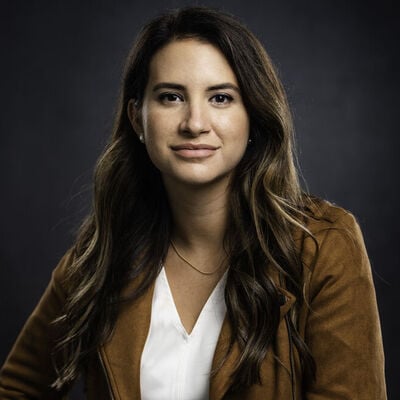
Allie Miller is one of the most followed AI leaders on the internet, and the credibility behind the following is real. She was the youngest woman to build an AI product at IBM, then led machine-learning business development for startups and venture capital at AWS. Today she advises companies and invests in the space.
What makes her useful on a corporate stage is range. She can brief a board on AI strategy in the morning and show a sales team how to use the tools by the afternoon. She stays current in a field that changes weekly, so her examples are the ones your audience saw in their feed last month, not last year.
Where her talk fits
Allie is a strong pick when a company wants practical AI adoption instead of a distant forecast. She focuses on what teams can do now: where to start and what to safely ignore, and how to build the habits that separate companies that talk about AI from companies that use it.
Most organizations do not have an AI problem. They have an adoption problem. The technology is ready before the people are.
She fits all-hands meetings, sales kickoffs, and leadership summits where the goal is to move a whole organization from curiosity to action.
Top 7 Women Keynote Speakers Comparison
| Speaker | Implementation complexity | Resource requirements | Expected outcomes | Ideal use cases | Key advantages | Limitations |
|---|---|---|---|---|---|---|
| Shannon Rowbury | Low–Moderate, mindset & culture changes | Moderate, speaker fee, bureau booking lead time | Energized teams, increased resilience, stronger team cohesion | Sales kickoffs, leadership offsites, org energizers | Inspiring athlete analogies; actionable team-performance tactics | Not technical; exclusive booking requires lead time |
| Milly Tamati | Low–Moderate, future-of-work and culture | Speaker fee; a broad audience works | Energized teams; a new lens on generalist talent | All-hands, culture and future-of-work events, MC roles | Bootstrapped-founder story; strong MC and host | Less technical; future-of-work rather than deep AI |
| Sol Rashidi | Moderate, enterprise AI and data execution | Premium fee; executive or industry audience | Practical AI adoption playbook; fewer failed initiatives | Leadership summits, board sessions, industry conferences | Fortune 100 data-officer track record; candid, no hype | Enterprise focus; less technical deep-dive |
| Drue Kataoka | Low–Moderate, visual and creative framing | Premium fee; strong AV and production for the visuals | Fresh view of visual AI; energized, inspired leaders | Innovation forums, leadership summits, executive events | World-stage credibility; visually stunning and rigorous | Best on a big production stage; premium tier |
| Dr. Maya Ackerman | Moderate–High, requires AI strategy alignment | High, premium fee; audience needs baseline AI literacy | Clear generative AI direction; product innovation insights | AI summits, engineering offsites, innovation workshops | Deep technical credibility; bridges research and product | Niche AI focus; higher cost |
| Rana el Kaliouby | Moderate, AI and ethics framing | Premium fee; executive engagement | Human-centered view of AI; clarity on trust and adoption | Leadership summits, customer conferences, AI events | Built Emotion AI; founder and investor credibility | Strategic altitude; less hands-on tooling |
| Allie Miller | Low–Moderate, practical adoption | Premium fee; a broad audience works | Faster AI adoption; concrete next steps | All-hands, sales kickoffs, leadership summits | Current, practical, high energy; wide range | Breadth over depth in any one vertical |
How to Select and Brief Your Next Keynote Speaker
Choosing among women keynote speakers gets easier when you stop asking who looks best on a lineup slide and start asking who can move this audience. A sales team usually needs momentum, clarity, and emotional reset. A product organization may need sharper thinking. A leadership summit often needs a speaker who can challenge assumptions without losing trust in the room.
That’s where planners sometimes go wrong. They book by fame, topic label, or a sizzle reel alone. Those inputs matter, but they’re not enough. The better filter is fit. What pressure is the audience under right now? What tension should the keynote address directly? What should people do differently after they leave the ballroom?
Briefing matters just as much as selection. Give the speaker context on the audience makeup, the event theme, and the internal language your teams already use. Tell them what’s sensitive, what’s urgent, and what you don’t want the session to become. If this is a sales kickoff, say so plainly. If morale is fragile after layoffs or reorganization, that should shape the tone. If the event team is still working through budgeting for an event, that also affects whether you need a keynote only or a broader workshop-style engagement.
One more practical point. Diversity onstage shouldn’t be treated as a side initiative. It should be part of how you evaluate quality. In tech especially, representation on keynote stages has remained uneven, and future-looking roles have often skewed toward repeat invitees. Stronger speaker selection widens the conversation, not just the roster.
The best bureaus help with this before the contract is signed. They pressure-test the fit, refine the brief, and shape the final session around business outcomes. That’s the difference between a keynote people enjoy and one they use. When the speaker’s story matches the moment your organization is in, the room feels it immediately.
If you want help finding women keynote speakers who bring real operating experience, not just polished bios, Silicon Valley Speakers can help match your event goals with a focused roster of builders, inventors, leaders, and high-impact storytellers.