
You’re probably trying to avoid one of two bad outcomes.
The first is the keynote that gets polite applause, a few LinkedIn posts, and then disappears the moment people reopen Slack. The second is the expensive “big name” booking that sounds impressive in the pre-event meeting but never lands with the actual audience in the room.
That’s why booking a keynote speaker motivational talk for a corporate event has to start with a harder question than “Who’s available?” The useful question is, “What business change are we trying to create, and who can credibly move this audience toward it?”
The strongest events don’t treat the keynote as decoration. They use it as a lever. If the speaker is right, the talk gives leaders a common language, gives teams a sharper frame for the year ahead, and gives attendees something concrete to act on after the lights come up. If the speaker is wrong, you’ve filled a program slot and little else.
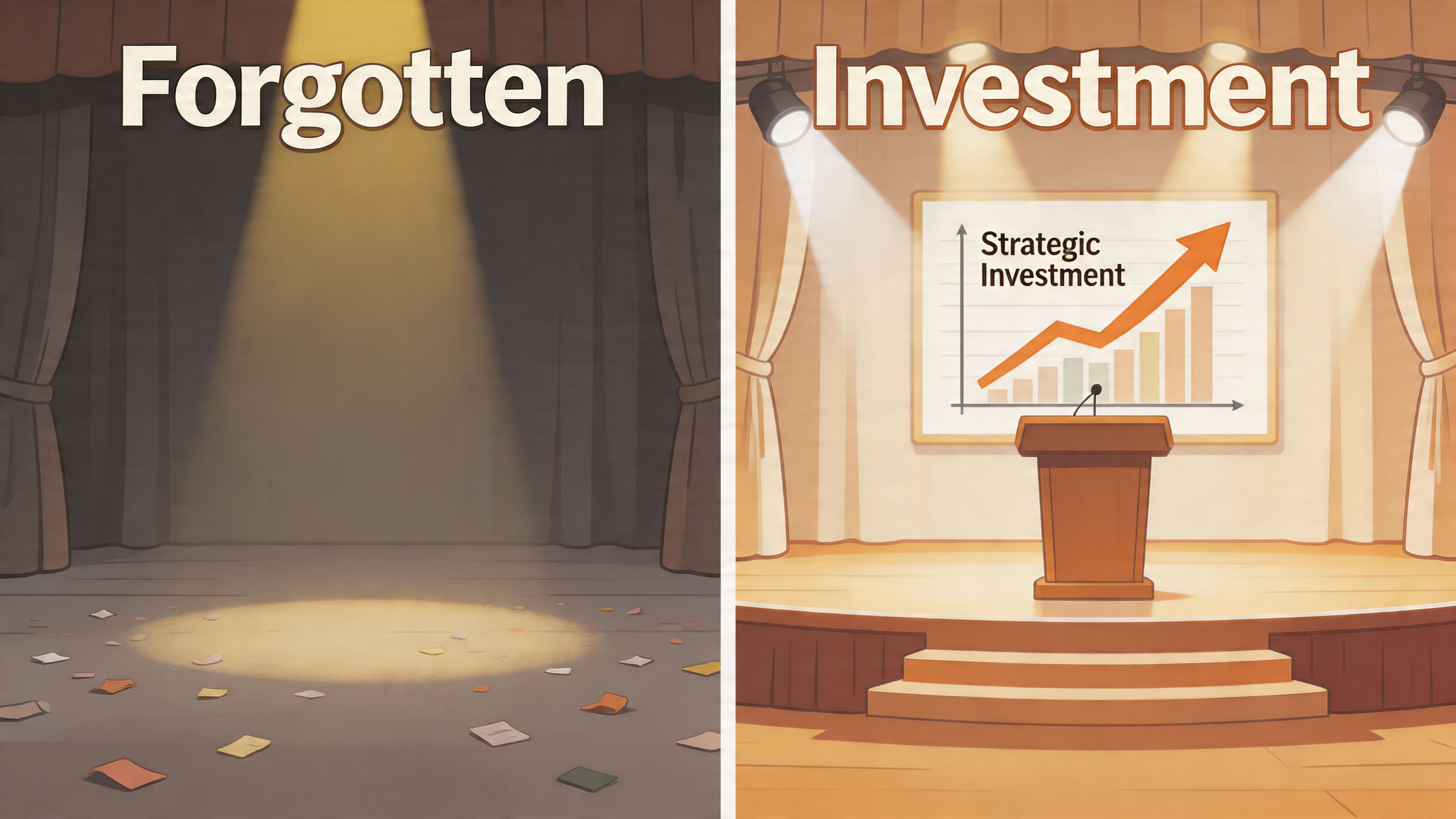
Beyond a Standing Ovation Why the Right Speaker Is a Strategic Investment
Most planners have seen the flat version. The speaker is polished. The intro is long. The story is dramatic. The audience claps. Then everyone heads to coffee and starts talking about logistics, not the message.
The better version feels different in the room. People quote the speaker over lunch. Your leadership team references one idea in later sessions. A sales manager uses the keynote language in a team meeting two weeks later. That’s when the talk stops being entertainment and starts functioning like part of the event strategy.
The market size alone should push planners to take the decision seriously. The global motivational speaking market is valued at approximately $1.9 billion, reflecting how widely organizations use speakers to support engagement and performance, according to motivational speaking industry statistics.
That number matters less for bragging rights than for context. Companies spend real money here because they expect a result. If you need a quick refresher on the strategic role of this slot, this breakdown of what a keynote is is useful.
Practical rule: If you’d be satisfied with applause alone, you don’t need a keynote. You need entertainment.
A keynote earns its keep when it helps people think differently and act differently. That usually comes from a speaker whose lived experience matches the moment your organization is in, not from the most famous person your budget can stretch to.
Aligning Your Speaker with Strategic Event Goals
Start with the event, not the speaker.
Planners often reverse that sequence. They hear a compelling story, fall in love with a reel, and then try to force-fit that person into a sales kickoff, leadership retreat, customer conference, or all-hands. That’s how you end up with a room saying, “That was interesting,” instead of “That was exactly what we needed.”
Define what success looks like in behavior
A motivational keynote should change something specific. Before you review a single profile, answer three questions:
- What should people think differently about? A market shift, a new strategy, a leadership standard, an AI transition.
- What should they feel? More confident, more urgent, more resilient, more open to change.
- What should they do next? Adopt a framework, use new language with customers, lead differently, collaborate across functions.
Those answers should be plain enough that a speaker could build around them.
Here’s a simple planning table that keeps teams honest:
| Event type | Good objective | Weak objective |
|---|---|---|
| Sales kickoff | Help reps embrace a new selling motion and stay confident through change | Pump people up |
| Leadership offsite | Give managers a practical lens for leading through uncertainty | Inspire leaders |
| Customer conference | Reinforce the future vision and build trust in where the category is going | End on a high note |
| AI workshop or annual meeting | Reduce fear around disruption and make the change feel navigable | Talk about innovation |
The difference is specificity. “Inspire the audience” is not a brief. It’s a wish.
Match story credibility to the room
Many keynote speaker motivational searches often drift into generic territory. A broad adversity story can work when the audience only needs energy. It works less well when the audience needs relevance.
For tech-facing events especially, planners are dealing with a real matching problem. A 2026 SHRM survey of 2,000 professionals showed 62% struggle to match speakers to tech shifts, highlighting demand for speakers who combine inspiration with practical tech foresight, as noted on this motivation speaking topic page.
That gap shows up all the time in planning calls. A company says it wants “motivation,” but what it really needs is help making AI disruption feel usable instead of abstract. In that case, a builder-visionary who has created products, led innovation, or translated emerging technology into real work is usually a stronger fit than a speaker whose message stays at the level of personal grit. Speakers like Adam Cheyer, co-creator of Siri, or Chris Barton, founder of Shazam, both come from that builder-visionary lineage — their stories are technical and emotional in equal measure. Speakers like Adam Cheyer, co-creator of Siri, or Chris Barton, founder of Shazam, both come from that builder-visionary lineage — their stories are technical and emotional in equal measure.
The audience doesn’t need the most dramatic life story. They need the most relevant credibility for the decision in front of them.
Use objective-based filters
When you’ve defined the goal, you can filter speaker options faster. Look for alignment in four areas:
Operating experience
Has the speaker built, led, invented, coached, or performed in the area they’re discussing?Audience fit
Can they speak to sales teams, technical teams, managers, executives, or mixed audiences without flattening the message?Customization range
Can they make the talk feel built for your company instead of lightly edited from a standard deck?Transferable framework
Do attendees leave with language or a model they can use, or just a memorable story?
A leadership team under pressure usually responds better to someone who can connect inspiration to execution. A room of engineers going through AI change often needs clarity and context more than theatrics. A customer event may need a future-facing visionary who strengthens belief in the category.
Don’t confuse broad appeal with fit
Some speakers can work almost anywhere. That doesn’t mean they should.
A speaker who resonates with a wellness retreat may miss badly at an enterprise software kickoff. A former athlete with a strong resilience story may be excellent for one audience and too generic for another. The best planners resist the urge to solve every event with one safe archetype.
What works is narrower and more disciplined. Define the business moment. Identify the audience’s friction. Then choose the person whose story, substance, and delivery can move that exact room.
How to Find and Vet a High-Impact Motivational Speaker
Once you know the job the keynote needs to do, the search gets easier. Not easy. Easier.
The trap here is volume. Endless lists make planners feel productive, but they usually slow down decision quality. You don’t need more names. You need sharper criteria and better evidence.
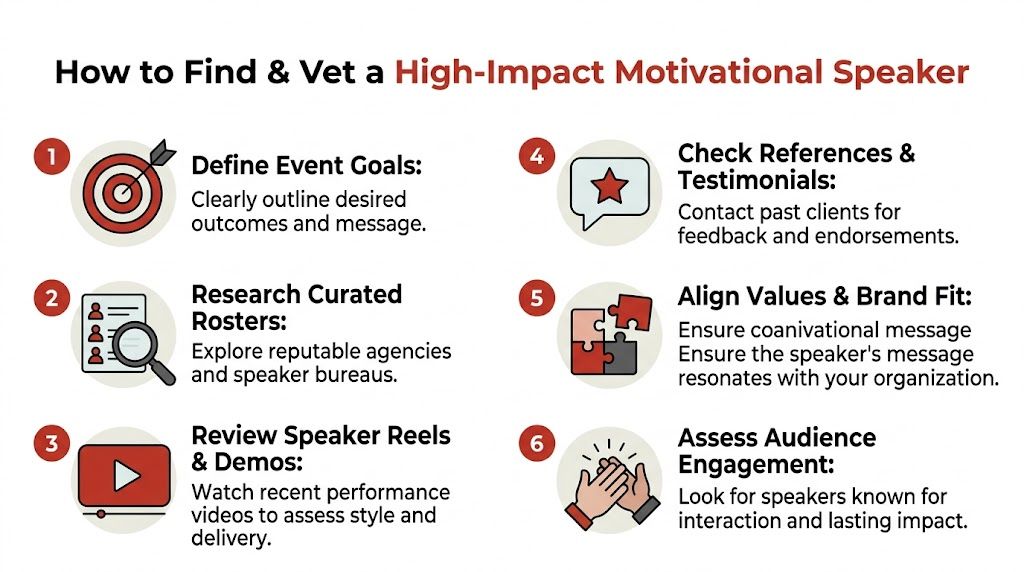
A focused search starts with curated options and a disciplined review process. Tools built for that kind of filtering, such as a speaker discovery engine, are more useful than broad databases because they force you to think in terms of fit, not just fame.
Watch more than the sizzle reel
A polished reel tells you whether someone has stage presence. It does not tell you whether they can hold a room for a full keynote, adapt to a tough audience, or deliver practical value.
Ask for full-length footage. Then review it like a producer, not a fan.
Look for:
Sustained engagement
Does the audience stay with the speaker after the opening story?Message structure
Can you identify the core argument and remember it without taking notes?Useful specificity
Does the talk include a framework, decision model, or language people can reuse?Audience calibration
Does the speaker read the room and adjust, or just run the same pace throughout?Authenticity under pressure
In Q&A or transition moments, do they still sound grounded and credible?
A keynote speaker motivational talk fails most often when the energy is high but the transfer is low. People feel something, but they can’t use anything.
Vet for mastery, not just charisma
There’s one screening standard that matters more than planners tend to realize. When vetting speakers, prioritize those with proven frameworks and 50+ polished deliveries of their signature keynotes, which supports the kind of mastery and cognitive bridging discussed in this keynote preparation guide.
That matters because a practiced keynote usually has better pacing, stronger transitions, and more room for customization. Experienced speakers know how to connect new ideas to what the audience already understands. That’s what helps retention.
Ask better questions in the vetting call
A weak speaker call sounds like scheduling. A useful one sounds like pre-production.
Use questions that reveal how the speaker thinks, prepares, and collaborates. For example:
- How do you tailor this keynote for an audience outside your home industry?
- What information do you need from us to make the talk specific?
- What does the audience usually do differently after hearing you?
- Which part of your message lands best with executives? With front-line teams?
- How do you handle a room that’s skeptical, tired, or overloaded?
- Can you share examples of how you’ve adapted this keynote for different business goals?
Then listen for substance. Strong speakers answer with process, not vague confidence.
A good sign is when the speaker asks hard questions back. They should want to know what’s at stake, who’s in the room, and what success looks like after the applause.
Know the red flags
Some warning signs show up early.
| Red flag | What it usually means |
|---|---|
| “I can speak on anything” | Message is probably generic |
| No full keynote footage available | The reel may be hiding weak structure |
| Minimal questions about your audience | Low customization discipline |
| Heavy emphasis on personal story, little on application | Strong emotion, weak transfer |
| Everything sounds inspirational but interchangeable | Poor fit for business goals |
Separate a compelling life story from a usable talk
A remarkable biography isn’t enough. The practical question is whether the speaker can convert experience into a framework your audience can apply.
Take a high performer from sport. The story alone may be moving, but for a corporate room value often comes from the method underneath it. How do they define preparation, recovery, focus, pressure, team trust, or performance consistency? If that layer isn’t there, the talk may land emotionally and fade operationally.
That’s the difference between hiring a performer and hiring someone who can shift behavior.
Navigating Budgets Contracts and Speaker Briefs
The commercial side of booking is where strong ideas can fall apart. A great fit on paper still needs to survive budget reality, contract detail, travel logistics, and a brief strong enough to support the final talk.
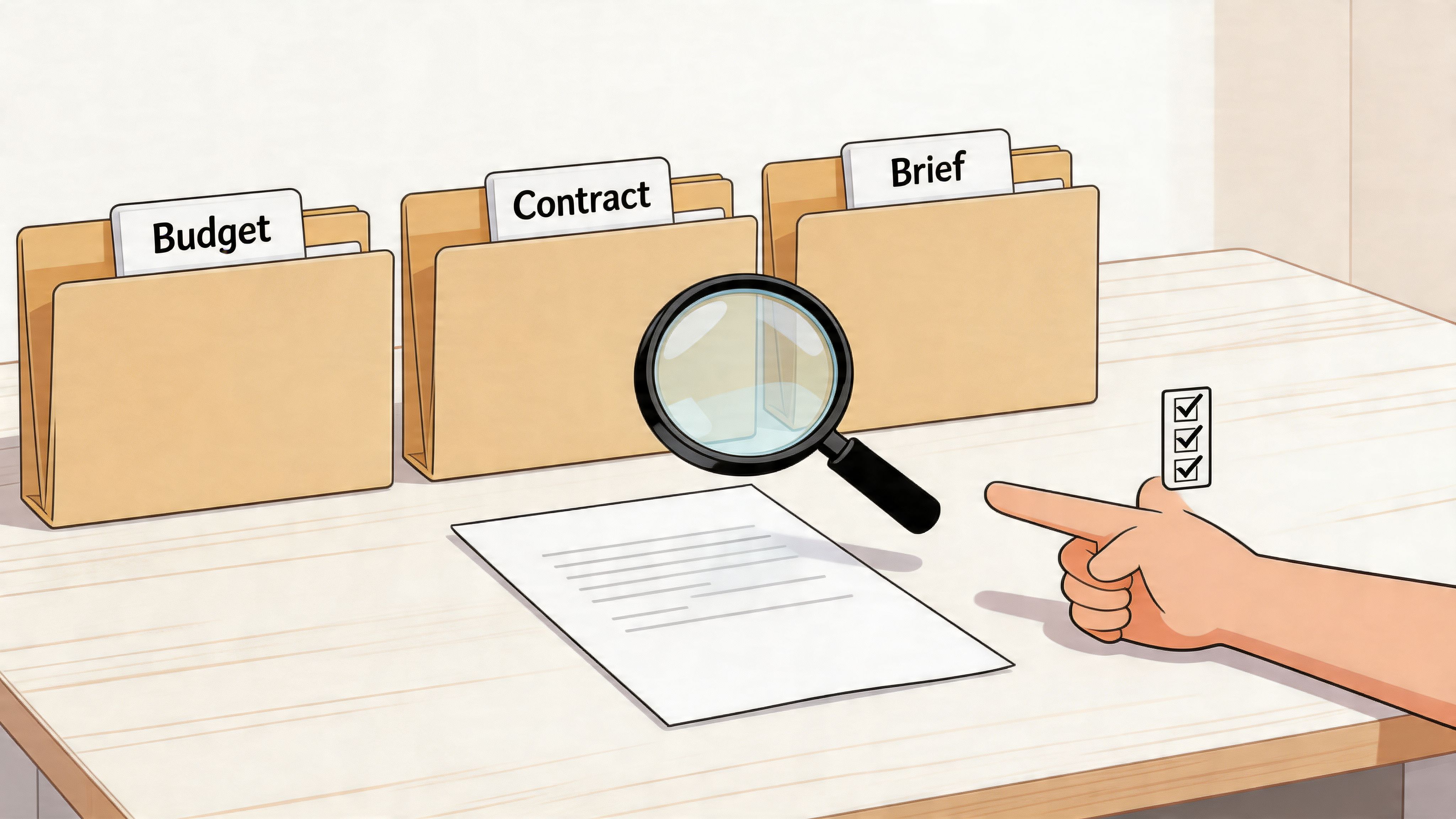
Planners who handle this well don’t just “book the speaker.” They create the conditions for the keynote to succeed.
Set a budget range before you shop emotionally
Speaker pricing spans a wide range. The top 1% command over $50,000 per keynote, while emerging professionals may charge between $1,500 and $5,000, according to the earlier industry data already cited.
That spread is why budget conversations should happen before the shortlist gets too exciting. If the internal ceiling is modest, don’t build a process around names that will never clear procurement. If the event has executive visibility and strategic importance, don’t underfund the slot and expect premium outcomes.
A few things usually drive the fee:
Demand and scarcity
High-profile names and speakers with limited dates carry stronger pricing.Topical relevance
Speakers closely tied to current business issues often command more attention.Customization load
A highly customized keynote or workshop usually requires more prep.Travel and schedule friction
Routing, timing, and event format can change the total cost.
Use a realistic booking timeline
The most common timing mistake is treating keynote booking like AV rental. It isn’t. The right person may already be committed, especially if your event sits in a busy conference season.
A practical rhythm looks like this:
| Event type | Better timing |
|---|---|
| Large annual conference | Start early and secure headline options well ahead |
| Sales kickoff | Begin when strategy is clear enough to brief properly |
| Leadership retreat | Leave enough time for customization and executive input |
| Internal offsite or workshop | Allow time for prep calls and agenda integration |
The exact calendar will vary, but the principle doesn’t. The more important the event, the earlier you should lock the speaker and the briefing process.
Don’t sign a thin contract
A short contract can be fine if the details are still covered. Too often, they aren’t.
Check for these points before anyone signs:
Scope of appearance
Keynote only, fireside chat, meet-and-greet, book signing, workshop, executive dinner.Timing and run of show
Arrival windows, soundcheck expectations, session length, Q&A details.Travel terms
Who books flights and hotel, what class of travel applies, what happens if schedules shift.Recording and usage rights
Can you capture the session? Can clips be used internally? Externally? For how long?Cancellation and force majeure
What happens if the event moves, goes hybrid, or changes date.Exclusivity or category restrictions
Important for customer-facing events or competitive industries.
The details may feel fussy. They become important the moment a marketing team wants to repurpose a keynote clip or the agenda changes the week of the event.
The speaker brief is where most of the value gets made
A thin brief creates a generic keynote. A strong brief creates relevance.
Give the speaker more than date, time, and dress code. A useful brief should cover:
Audience profile
Role mix, seniority, technical fluency, internal mood, likely skepticism.Business context
Current strategy, pressure points, language the company uses, recent changes.Event context
Theme, what comes before the keynote, what follows it, why this slot matters.Desired tone
Urgent, optimistic, challenging, practical, visionary, candid.Landmines
Topics, jokes, references, or internal issues to avoid.One essential takeaway If attendees remember one line or one idea, what should it be?
A strong speaker will usually request some version of this anyway.
For a quick primer on how speakers think about preparation and presence, this clip is useful before your briefing call:
Protect the talk from internal drift
One of the quieter booking problems is stakeholder creep. Marketing wants brand mentions. HR wants culture language. Sales wants urgency. The CEO wants strategic alignment. Product wants a nod to innovation. Every request sounds small on its own. Together they turn the keynote into a compromise document.
The planner’s job is to consolidate those inputs and protect a clear point of view. If the brief becomes a committee product, the speech often loses force.
The best keynote briefs are selective, not exhaustive. Give context, define the outcome, and leave room for the speaker to do the job.
Activating Your Speaker for Maximum Engagement
A keynote shouldn’t be treated like a single stage moment that starts at the intro walk-on and ends at applause. That approach wastes value.
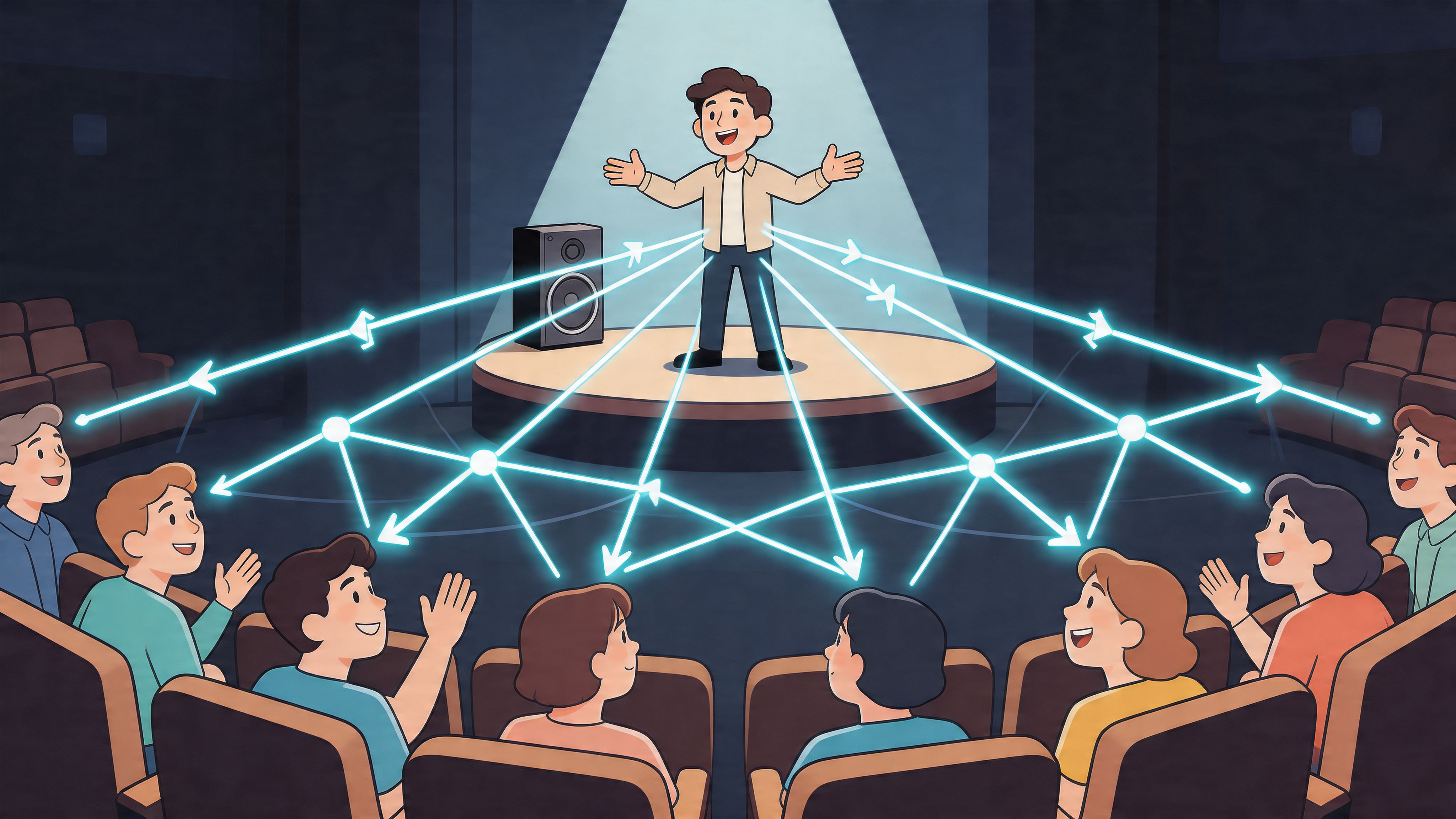
If you’ve booked well, the speaker can do more than fill a session. They can help create anticipation before the event, deepen learning during it, and extend the message after people go home.
Build momentum before the walk-on
Most audiences meet the keynote for the first time in the room. That’s late.
A better move is to give attendees a small amount of context in advance so they arrive ready to listen with purpose. That can be a short internal Q&A video, a one-page preview from the speaker, or a note from the event sponsor explaining why this voice was chosen now.
Pre-event activation works best when it answers one question: why this person for this audience at this moment?
Useful formats include:
- A short leader intro video connecting the keynote to company priorities
- One advance question from attendees collected in registration or Slack
- A brief speaker teaser framed around the event theme, not self-promotion
- A reading or listening prompt so people show up with context
Design the room around participation
Many planners say they want engagement, then create a session design that only allows passive listening.
If the keynote topic is practical, build in ways for the message to travel beyond the main speech. That may mean a moderated Q&A, a smaller leader roundtable, or a follow-up discussion guide for managers. The audience doesn’t need more content. They need a chance to convert the content into action.
Here’s a simple comparison:
| Format | What it does well | Where it falls short |
|---|---|---|
| Standalone keynote | Sets tone, creates shared energy | Limited practice and discussion |
| Keynote plus Q&A | Clarifies and localizes ideas | Still light on skill-building |
| Keynote plus workshop | Turns insight into application | Requires more time and coordination |
| Keynote plus leader session | Helps cascade message internally | Less direct audience participation |
Extend the keynote into a learning experience
A keynote speaker motivational booking often becomes more valuable. A strong stage talk can open the door, but a workshop or smaller session is where teams often do the hard work.
For innovation, leadership, AI adoption, or peak performance themes, a half-day or full-day session can move the room from “that was inspiring” to “here’s how we’ll apply this.” That format gives teams time to ask harder questions, test frameworks, and connect the message to real work.
The speakers who perform best in that setting are usually the ones with actual methods, not just stories. They can facilitate, not just deliver.
If the business problem is complex, don’t ask a single keynote to do all the lifting. Use the keynote to open attention, then use a workshop to build capability.
Give the message a second life after the event
Post-event follow-through doesn’t need to be elaborate. It does need to be intentional.
A few practical ways to extend value:
- Send a recap with three takeaways and one action prompt
- Equip managers with discussion questions for team meetings
- Clip a short internal video segment if your usage rights allow it
- Reinforce one shared phrase or framework in later communications
The best keynote messages travel because leaders keep using them. If nobody refers back to the talk, the keynote stays isolated. If the event team and leadership team reinforce one or two core ideas, the session keeps working after the ballroom is empty.
Measuring the True ROI of Your Keynote Speaker
This is the question every planner eventually gets. Sometimes from finance. Sometimes from leadership. Sometimes from themselves after the event invoice hits.
Was it worth it?
The usual answer is weak. People say the audience loved it, the speaker got strong applause, social posts looked good, and feedback was positive. None of that is useless. None of it is enough.
The better approach is to treat keynote ROI in layers.
Start with what most teams miss
There’s a real measurement gap here. 80% of organizations report improved morale after an external speaker, but only 28% of organizers use post-event surveys that tie keynotes to business outcomes, according to these keynote success measurement benchmarks.
That means many teams are spending on keynotes and then measuring only the easiest signals. If you want a more complete event evaluation framework, this guide to measuring event ROI is a helpful companion because it widens the lens beyond audience enjoyment.
Tier one measures immediate engagement
The first layer tells you whether the session connected in the room.
Use signals you can capture on the day:
- Live polling participation if your format supports it
- Q&A involvement from the audience
- Volume and quality of audience questions
- Internal social chatter or shared notes
- Observation from room leads on attention and energy
This layer matters because a keynote that doesn’t connect in the room is unlikely to drive later change. But don’t stop here. Immediate engagement is necessary, not sufficient.
Tier two measures learning and intent
The next layer asks whether attendees can articulate what they took from the talk and what they plan to do with it.
Post-event surveys should go beyond “How would you rate the speaker?” Ask questions that expose transfer:
- What is the one idea you’re most likely to use?
- What will you do differently because of this keynote?
- Which part of the message felt most relevant to your role?
- Would you recommend this speaker again?
If you use Net Promoter Score as part of your event review, the benchmark often cited is above 70 for a strong repeat-booking signal, as noted in the same measurement source above.
A practical addition is manager follow-up. Ask leaders to discuss the keynote with their teams within a week and report back on what resonated. That creates accountability and gives you richer feedback than a generic survey alone.
A keynote has business value when people can name the action, not just the emotion.
Tier three measures behavior and business movement
This is the part most planners skip because it requires coordination. It’s also the part that leadership usually cares about most.
Tie the keynote to one or two business outcomes that were already important before the event. The exact KPI depends on the event type:
| Event type | Better long-term measure |
|---|---|
| Sales kickoff | Adoption of new messaging, manager-reported confidence, pipeline behavior trends |
| Leadership retreat | Follow-through on leadership practices, team communication habits, manager feedback quality |
| AI or innovation event | Participation in new initiatives, workshop follow-up, internal adoption behaviors |
| Customer conference | Post-event meeting activity, content reuse, customer sentiment from follow-up conversations |
The key is discipline. Don’t claim the keynote caused every positive shift. Instead, show that the keynote supported a target behavior and that you tracked whether that behavior changed.
Build the measurement plan before the event
ROI gets fuzzy when teams try to invent metrics after the keynote is over. Build the scorecard during planning.
A simple pre-event checklist helps:
Define the keynote’s business purpose
Pick one primary outcome, not five.Choose one immediate metric
Engagement in the room.Choose one short-term metric
Survey response tied to intended action.Choose one longer-term metric
A behavior or KPI your team can revisit later.Assign owners
Event team, HR, sales enablement, or leadership operations.
This doesn’t need to become a research study. It just needs to be intentional.
What doesn’t count as proof
Some data points are useful but overinterpreted.
A packed room may reflect agenda design more than speaker quality. High applause can mean the ending was strong. Positive comments may show the audience enjoyed the experience. None of those alone proves the talk changed anything important.
That doesn’t mean inspiration has no value. It means inspiration should be connected to implementation.
For planners building broader event strategy, it also helps to align keynote measurement with the rest of the program. This overview of how to plan a corporate event is useful because it frames the keynote as one part of a larger business outcome, not an isolated performance.
The strongest post-event readout usually includes three things: what happened in the room, what attendees said they would do, and what changed afterward. That’s the difference between defending a keynote expense and demonstrating that the session contributed to a real business objective.
If you want a speaker who brings more than a polished story, Silicon Valley Speakers specializes in builders, inventors, and visionaries whose achievements map directly to business goals. That’s especially useful when you need a keynote that doesn’t just inspire for an hour, but helps your audience act differently after they leave the room.