When you are planning a corporate event, "keynote speaker" and "workshop facilitator" often get used as if they mean the same thing. They do not. Booking the wrong one is one of the most common and most expensive event mistakes, because a great keynote and a great workshop solve completely different problems.
Here is the real difference, and how to know which one your event actually needs.
What a keynote speaker does
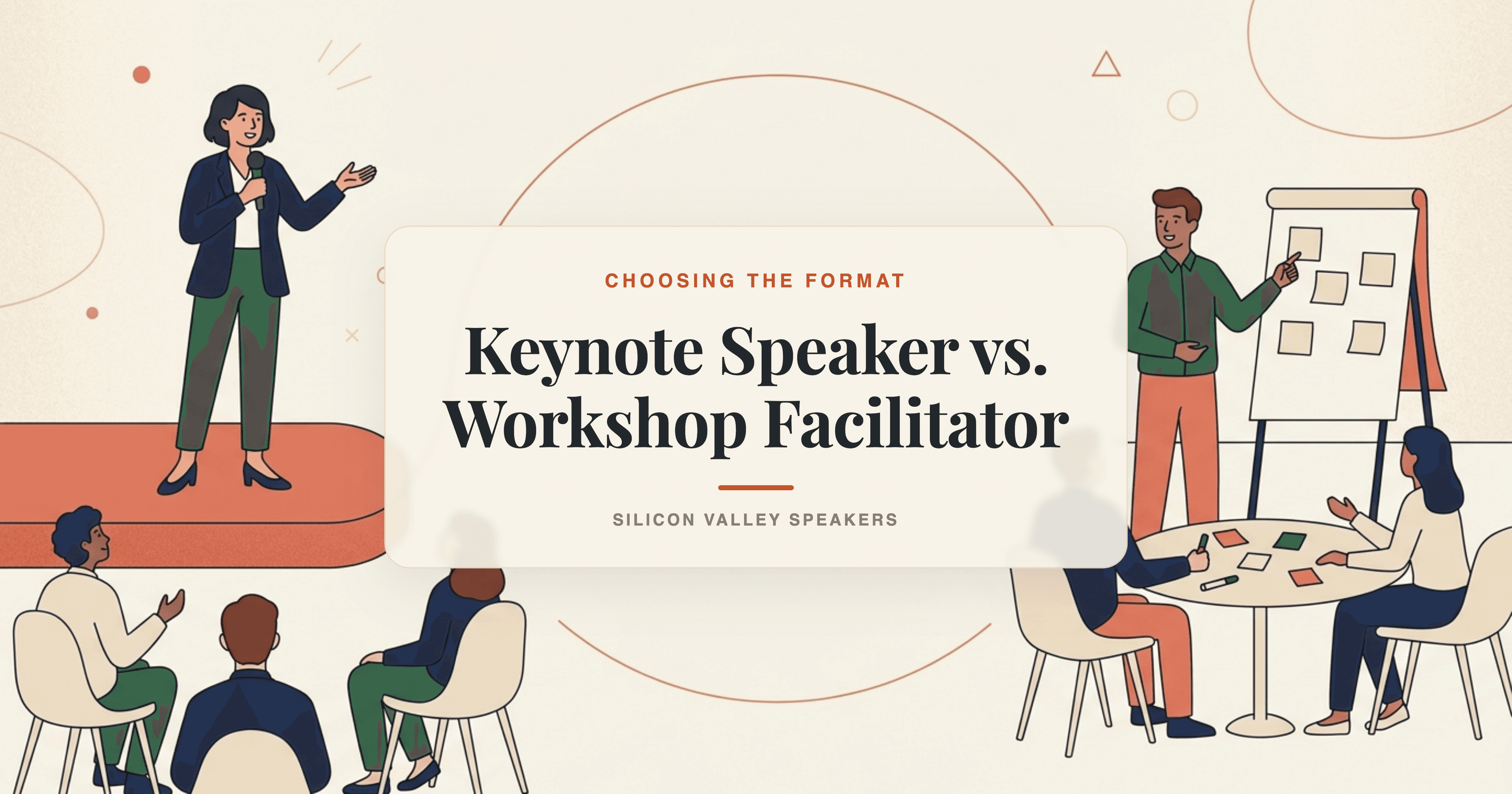
A keynote speaker delivers a talk. It is usually 30 to 60 minutes, on a stage, to a large audience, and it is designed to shift how people think or feel. A strong keynote sets the tone for an event, energizes a room, and leaves people with a few ideas they keep talking about afterward. The value is inspiration, a shared message, and momentum.
Keynotes are largely one-directional. The speaker leads, the audience listens, and there is often a short question-and-answer at the end. That format is a feature, not a limit. It is how you move a big room around a single idea. If you want the basics, here is what a keynote is.
What a workshop facilitator does
A workshop facilitator runs a working session. The goal is not to inspire a crowd but to help a smaller group build a skill, solve a problem, or produce something real by the time they leave. A workshop is hands-on and interactive, and it is measured by what people can do afterward, not just how they felt in the room.
Facilitation is a different craft than keynoting. A facilitator manages exercises and discussion, reads the room and adjusts in real time, and keeps a mixed-skill group moving toward an outcome. Good facilitators are comfortable with the messiness of a live working session.
The real difference at a glance
| Consideration | Keynote speaker | Workshop facilitator |
|---|---|---|
| Format | Stage talk | Hands-on working session |
| Primary goal | Inspire, align, and energize | Build a skill or produce an outcome |
| Audience size | Large, hundreds to thousands | Smaller, a team to a few dozen |
| Interaction | Mostly one-way, short Q&A | High, exercises and discussion |
| Typical length | 30 to 60 minutes | Half a day to a full day, or a focused 90 minutes |
| What you measure | Energy, message recall, tone | Skills, deliverables, behavior change |
| Best for | All-hands, conferences, kickoffs | Team training, upskilling, problem-solving |
When to book each
Book a keynote when you want to open a conference, energize an all-hands, reset the tone after a hard quarter, or deliver one big idea to a large audience. Book a workshop when you want a team to walk out with a new skill or a finished piece of work: an AI literacy session for non-technical employees, a hands-on session for a sales team, or a leadership group working through a real problem together.
A useful test: if success means the room felt something, you want a keynote. If success means people can now do something they could not do this morning, you want a workshop.
AI workshops: what to expect on format and length
Because so much demand right now is around AI, this comes up constantly. An AI literacy workshop for non-technical employees should be interactive, not a lecture. People learn to use the tools by using them, with a facilitator guiding hands-on exercises against real work. A lecture-style session can explain AI; a workshop makes people comfortable actually using it.
On length, a focused skills workshop for a company all-hands often runs 60 to 90 minutes when it has to fit inside a larger agenda, while a real upskilling session runs half a day to a full day. The right length depends on the outcome you want: awareness needs less time than fluency. You can see how this plays out in practice on our corporate workshops.
Can one person do both?
Some speakers do both well, and pairing them is common: a keynote in the morning to set the vision, a workshop in the afternoon to put it into practice. When you book through a bureau, ask whether a speaker offers both formats, because the same expert delivering both keeps the message consistent from stage to breakout.
Frequently Asked Questions
What is the difference between a keynote speaker and a workshop facilitator?
A keynote speaker delivers an inspiring stage talk to a large audience, usually 30 to 60 minutes, to shift how people think or feel. A workshop facilitator runs an interactive working session with a smaller group to build a skill or produce an outcome. Keynotes inspire; workshops teach and produce.
Should I book a keynote or a workshop for my event?
Book a keynote to inspire, align, or energize a large audience. Book a workshop when you want a team to leave with a new skill or a finished piece of work. If success is a feeling, book a keynote; if success is a capability, book a workshop.
How long should an AI workshop be for a company all-hands?
A focused AI workshop at an all-hands often runs 60 to 90 minutes, while a full upskilling session runs half a day to a full day. Awareness needs less time; fluency needs more.
Is an interactive workshop better than a lecture for AI training?
For skill-building, yes. People learn to use AI tools by using them. An interactive, hands-on workshop builds real comfort, while a lecture mainly builds awareness. Match the format to whether you want people informed or capable.
Can one speaker do both a keynote and a workshop?
Many can, and pairing them works well: a keynote to set the vision and a workshop to apply it. Ask your bureau whether a speaker offers both formats.
Not sure whether your event needs a keynote, a workshop, or both? Silicon Valley Speakers can match you with speakers who do either, or both. Tell us your goal and we will recommend the right format and the right person.